


Building Better Teams: How to Teach Teamwork with Minecraft Education
09 Apr 2026
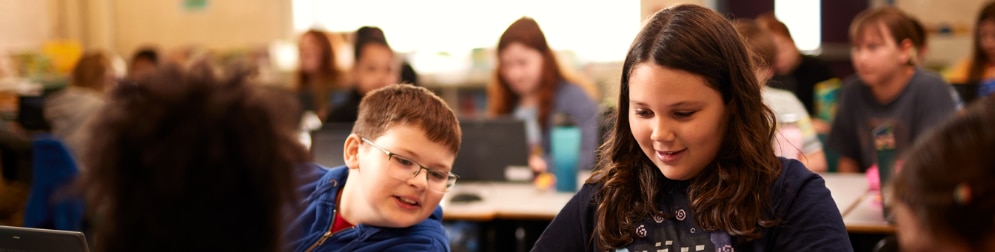
Some of the most meaningful learning in Minecraft Education happens when students work together. Whether constructing a sustainable city, solving a STEM esports challenge, or exploring history together, success often depends on how well they collaborate, communicate, and problem-solve as a team. Let’s explore several ways to maximize the benefits of collaboration within Minecraft Education classroom experiences.
Minecraft Education has lots of experiences suitable for classroom collaboration. Check out these examples below, set up students with their roles, and start building.
- Building Bridges: Challenge students to work together to build bridges in three different locations, learning about engineering and problem-solving in real time.
- Wheel of Steve: An immersive 21st century skills experience where students will work together across five different mini games, building creativity, critical thinking, communication, community, and collaboration.
- Building Community: What does it take to build a thriving community? Students will work together to improve a city that needs help to grow.
Teach Communication & Decision-Making
Teamwork is a learned skill, and students won’t necessarily know how to communicate effectively right away. Set expectations by encouraging students to share plans before building, be communicative with their thoughts and reasoning, and ask permission before changing someone else’s work. Listening and responding rather than reacting is a powerful lesson in communication.
Besides divvying up tasks, students will also learn that teamwork entails making decisions together. Creating moments to encourage this, such as choosing between multiple design ideas and prioritizing limited resources, will give them the experience and boost their confidence to speak up and share their opinions when key decisions need to be made. Small support can make a big difference, especially for quieter students.
Normalize Problem Solving and Healthy Conflict
In Minecraft, things will go wrong, and that’s where the real learning happens. A build might fail, a teammate might make a mistake, or the group may struggle to agree on a direction. Instead of treating these moments as setbacks, frame them as opportunities to think, adapt, and improve together.
Encourage them to step back, reflect on what’s not working as a team, and try a new solution-focused approach. Remind them that every great creation goes through revision—whether it’s Minecraft, which evolved through countless updates, or the James Webb Space Telescope, which required decades of redesign and teamwork to succeed. Seeing challenges as part of the process will build resilience and students will become better collaborators because of it.
Classroom management for group projects
Often students with more experience playing Minecraft will step up to demonstrate their aptitude in a group project or build, which can support leadership development and build confidence. Students without any game experience can benefit from the opportunity to contribute other skills, like artistic creativity, writing and planning. Before students even enter the world, consider assigning roles to ensure that every learner has purpose and accountability in the project. Rotating roles allow students to build multiple skills. Example roles include:
- Planner – maps out the build or strategy
- Builder – constructs the design
- Resource Manager – gathers and tracks materials
- Tester – checks functionality and quality
- Communicator – shares updates with the team
It’s also useful to reflect together after a project. Ask students questions like:
- What worked well in your team?
- What would you do differently next time?
- How did you handle disagreements?
- Did everyone have a role?
Ready to Get Started?
Find more build challenges that encourage collaboration here! When you set your students up with clear team roles and time to reflect at the end, you might be surprised, not just by what your students build, but by the supportive teams they become.
