IMG-LOGO

Understanding Cloud Computing in the World of AI

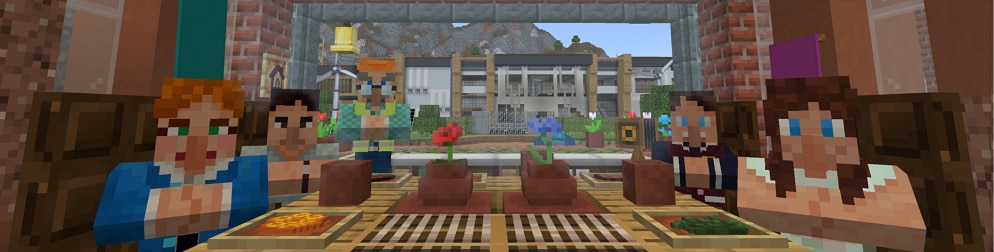
28 Apr 2026 Minecraft characters sit around a table indoors while another character stands outside, with a school building in the background.

What does it take to power the digital world—responsibly, securely, and sustainably?

In Cloud Community, a new Minecraft Education learning experience created with Microsoft’s Community Development team, students don’t just learn about cloud computing, they step inside it. Learners explore a modern, AI‑ready datacenter and tackle one of today’s most important real‑world challenges: balancing sustainability, energy demands, and cybersecurity in an AI‑driven world.

Designed for learners ages 10–17, Cloud Community transforms complex STEM concepts into hands‑on, scenario‑based missions. Through collaboration, problem‑solving, and purposeful play, abstract systems become visible, meaningful, and memorable.

Why Teach Datacenters in Minecraft?

Datacenters provide the energy and power systems for AI, cloud computing, and everyday digital services—from online learning to healthcare and emergency response. But we don’t often see datacenters or understand their place in the digital economy. By placing learners in an interactive Minecraft world, Cloud Community helps them explore the impact of their decisions firsthand. A nearby village represents the real people who depend on the datacenter. When students make smart choices, the community thrives. When systems break down, they feel the consequences. This cause-and-effect gameplay builds relevance, motivation, and agency, turning learning into an experience students want to talk about, revisit, and master.

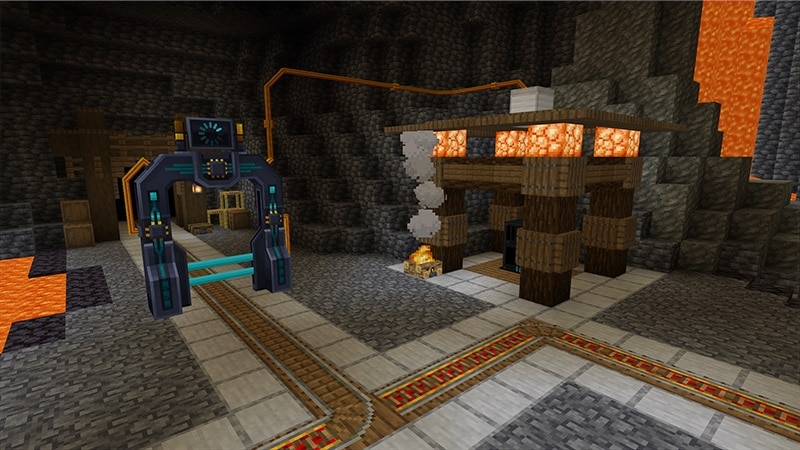
Mine tracks run through an underground station with a glowing portal and a wooden shelter.

Learning Through Play: Five Engaging Missions

Cloud Community is designed as a 45–60-minute classroom experience, made up of five connected missions. Each one blends gameplay with real‑world STEM concepts and classroom standards. Students also encounter careers like sustainability engineer, cybersecurity analyst, datacenter technician, and AI specialist. Here’s an overview of the missions:

Students kick things off by constructing the datacenter itself. They gather materials, operate machinery, and assemble the facility using low‑carbon concrete and recycled steel.

What students learn:

  • Why AI growth requires new infrastructure
  • How sustainable building choices reduce environmental impact
  • How local design decisions affect a broader community

Datacenters heat up fast, and keeping servers cool is critical. In this puzzle‑based challenge, students connect water pipes to restore a cooling system before things overheat.

What students learn:

  • Why cooling is essential for efficiency and safety
  • How water‑based cooling systems work
  • Systems thinking and cause‑and‑effect logic

Deep in a diamond mine, students experience how latency slows AI decision‑making. By repairing an edge node, they bring computing to where it’s needed and dramatically improve response time.

What students learn:

  • What latency is and why it matters
  • How edge computing brings processing closer to users
  • Real‑world connections to gaming, AI, and automation

As demand spikes, students must keep the datacenter powered using renewable energy sources like solar and wind, with hydrogen backup when conditions change.

Weather shifts, costs fluctuate, and teamwork becomes essential.

What students learn:

  • Trade‑offs between different energy sources
  • Why balancing renewables is critical
  • How sustainability and reliability work together

In the final mission, students step into a simulated Security Operations Center (SOC). Using a fast‑paced, game‑style interface, they identify threats, investigate alerts, and see how AI supports human analysts.

What students learn:

  • How cybersecurity protects infrastructure and communities
  • The difference between false and true positives
  • How humans and AI collaborate to manage complex systems
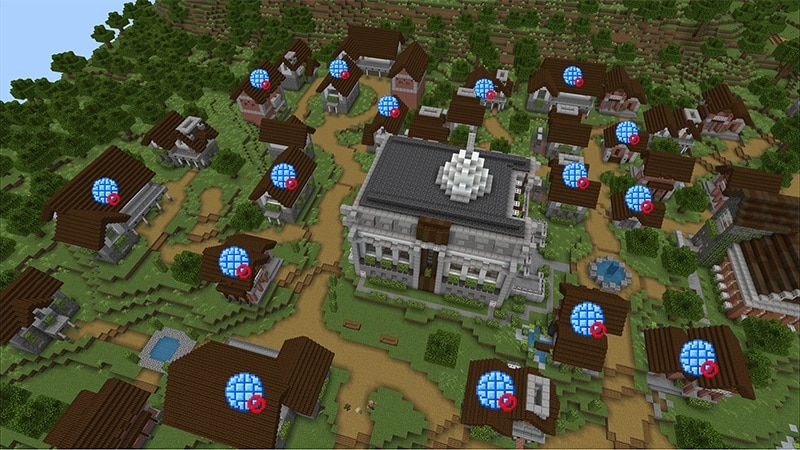
A Minecraft village seen from above with map markers placed on buildings around a large central structure.

Classroom-ready Materials for Teachers

Cloud Community includes a comprehensive Educator Guide, reflection questions, and differentiated learning checks for upper elementary and secondary learners. The experience aligns with:

  • CSTA Computer Science Standards
  • ISTE Standards for Students
  • AI4K12 Big Ideas, including societal impact and machine learning

Educators can use Cloud Community as a standalone lesson, a starting point for sustainability or cybersecurity units, or a career-connected learning experience.

Introduce Cloud Computing with Agent and Chicken

We also have a new video in our AI Adventurers series featuring Agent and Chicken, two curious companions who teach about how AI works. The latest installment takes viewers on a journey to a datacenter, as they learn how AI systems break down and analyze parts of a question—and how AI helps us solve problems big and small. Check it out:

Bring cutting edge STEM learning into your classroom, and spark curiosity about how technology shapes the world. Get the lesson plan and explore our AI Foundations program for building AI literacy!