Building AI Skills—and Human Ones—Through Minecraft Education in Japan By Aiko Shimizu, AI Skills Director, Microsoft

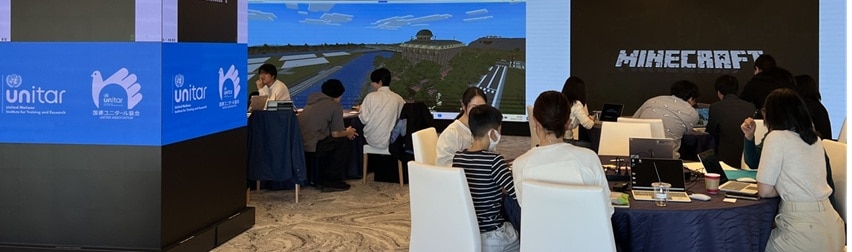
28 Jun 2026 Several people seated in a room, focused on a speaker presenting information on a screen.

What if learning AI didn’t start with code—but with creativity, collaboration, and empathy?

Across Japan, educator and innovator Takashi Doi is exploring exactly that. As a member of Microsoft Elevate for Educators and Representative Director of the Japanese nonprofit Digital Monozukuri Council, Doi has been pioneering a new approach to AI education with partners like Microsoft and Professor Hidenori Watanave of the University of Tokyo—one that uses Minecraft not only to teach technical skills, but to cultivate the human capabilities students will need in an AI economy.

Rethinking AI Education Through Play

AI is often seen as complex, abstract, and out of reach for many students. Doi’s approach challenges that perception.

Using Minecraft Education’ AI Foundations curriculum, students engage with AI concepts through hands-on, creative problem-solving. Rather than starting with theory, they begin by building—designing worlds, experimenting with logic, and exploring how systems interact.

Through these experiences, learners develop foundational AI skills such as computational thinking, pattern recognition, and systems design. But just as importantly, they gain confidence. AI becomes something they can explore, question, and shape, not just something they passively consume.

This model has been scaled through Minecraft AI Education workshops across Japan, helping learners nationwide access future-ready skills in a way that feels engaging and accessible.
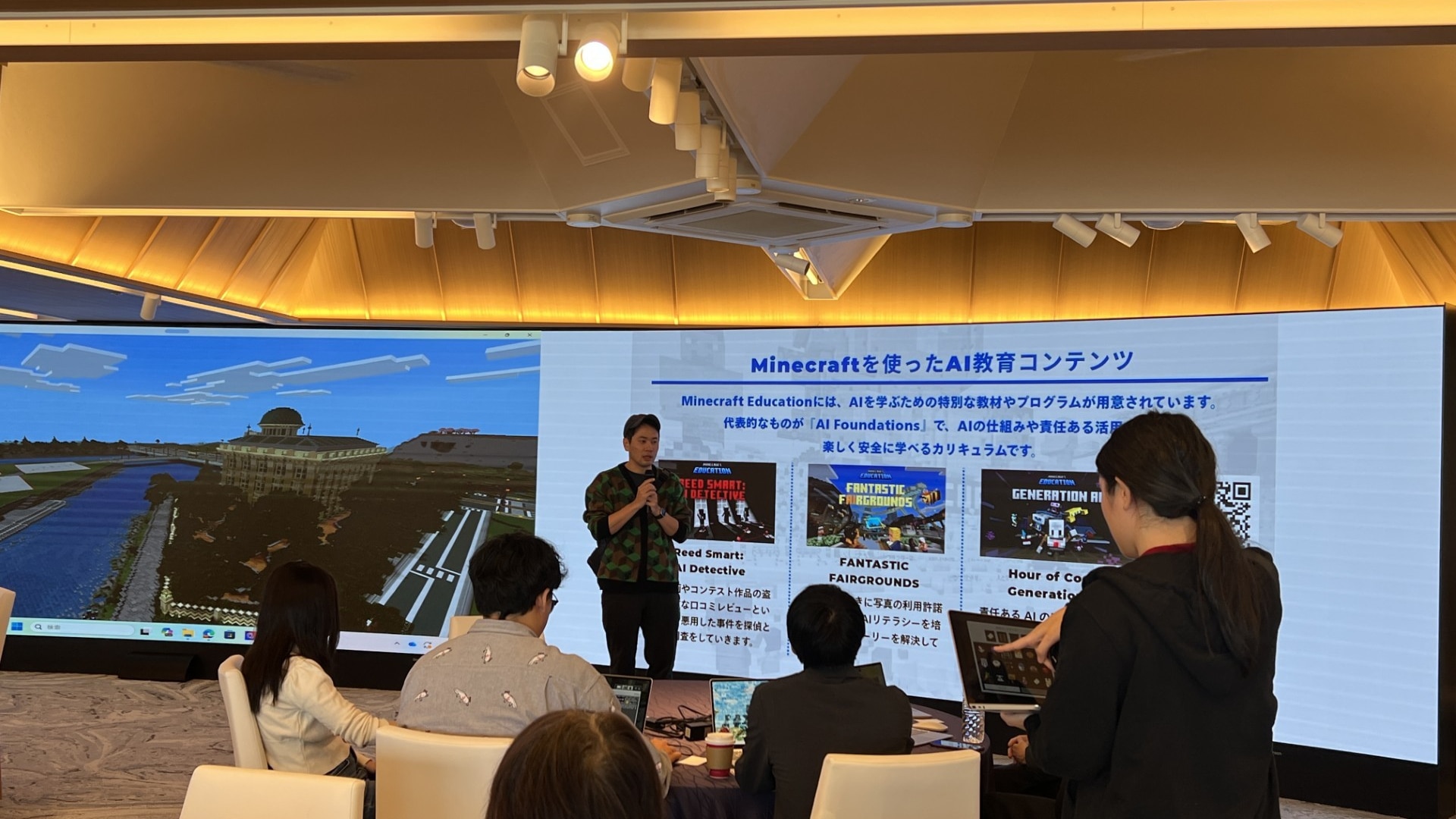
A group of viewers sitting together, watching a video on a large screen.

Building Human Skills That Matter

While technical AI literacy is essential, Doi’s work emphasizes that it’s not enough on its own.

In every workshop, students collaborate—sharing ideas, solving challenges together, and co-creating digital environments. They make decisions about how to represent ideas, navigate trade-offs, and communicate their thinking.

These experiences build critical human skills like creativity, teamwork, and empathy.

In the AI economy, these capabilities will shape not just what students can do, but how they lead, innovate, and contribute to society.

Hiroshima: Learning Peace Through Technology

One of the most powerful examples of this approach is the Hiroshima workshop organized in partnership with Microsoft, the United Nations Institute for Training and Research (UNITAR), and Professor Hidenori Watanave’s Laboratory at The University of Tokyo.

Here, Minecraft becomes a medium for exploring a topic that might seem far removed from technology: peacebuilding.

Students engage with the history and legacy of the atomic bombing of Hiroshima—not just by learning about the topic, but by interacting with it. Through building and storytelling, they reflect on themes of resilience, loss, and hope.

This immersive experience encourages learners to connect emotionally with history while also thinking critically about its relevance today. What does peace mean in a modern, interconnected world? What role can technology play in preserving and sharing these stories?

By combining AI skills and digital creation with a deeply human topic, the workshop shows how technology can be used not only to build skills, but to foster understanding.

From Local Impact to National Momentum

While Hiroshima represents a powerful case study, it is part of a broader movement.

Through nationwide Minecraft AI Education workshops, Doi and his partners are reaching learners across Japan—bringing together educators, communities, and students to explore new models of teaching and learning.

This work reflects a growing recognition: preparing students for the future is not just about teaching them to use technology but empowering them to use it with purpose.

Shaping the Future of Learning

As AI continues to transform industries and societies, education must evolve alongside it.

Microsoft’s partnership with Doi and his nonprofit offers a compelling vision of what that future can look like—one where learners build both technical fluency and human insight, where creativity and empathy are developed alongside computational thinking, and where tools like Minecraft become platforms for meaningful, real-world learning.

The Hiroshima workshop is one example of this vision in action, but the broader story is even bigger. It’s about equipping the next generation not just to understand AI—but to shape a future where technology serves humanity.